
There has been much furore and debate on travel Twitter this week after a scathing article on the New Yorker caused a stir. In case you missed it, you can read it here. Grab a cuppa, then come back to read my take on it.
I get why the article was written and I get a couple of points that the writer was trying to make. The premise of the article – I think? – is that people don’t necessarily care about what they’re seeing when they travel; travelling for the sake of travel or being able to show off back home – and that it certainly doesn’t automatically make you a better person or have to be a meaningful experience.
There are some great discussions to be made about all of these points, and instead the writer comes off as condescending, indignant at the idea that anyone could actually find real satisfaction in travel, and even writes about how people who travel “can’t truly connect to other human beings”, and the “openness to experience is what renders the tourist incapable of experience”.
This post contains affiliate links. Please note if you buy or book anything through my links, I may earn a little commission that helps keep this site running, at no extra cost to you. Thank you so much for your support!
She goes off on tangents to rant about how delusional travellers are, while talking about her own experiences which include “staring at people, intently inspecting their clothing, their demeanor, their interactions”, and visiting a falcon hospital which was completely pointless because there has been “zero falconry” in her life before and after this event, as if experiencing something totally new while travelling will provide nothing valuable to your life.
I vaguely understand some of the points she’s trying to make with these. Tourists undertaking activities that they think they “should” be doing to have a good experience; drawing fascination towards the mundane to create a sense of self-enlightenment. But it comes off a little unhinged – most people don’t intensely stare at everyone else trying to find what’s interesting about them or what makes them unique. They’re not aliens; they’re fellow human beings, and it’s normal, every day interactions that bring out the best in people. Openness to “new experiences” should be an opportunity, not an expectation.
You could have a whole conversation about superficial travel, too – people travelling for instant gratification, posting beautiful photos for everyone back home and plastering them all over social media for likes. The Instagram effect of tourist hot spots and places that would have been previously off the beaten path, now surrounded by visitors just trying to get that perfect photo that everyone else has taken. Not actually experiencing what they’re travelling for, and sometimes forgetting why they’re travelling in the first place.
And, of course, people do visit attractions because they’re popular. The writer makes an example of the Louvre – how millions of people visit and see the Mona Lisa for a few seconds, and that’s another box ticked and they move on.

Which brings me to my own point: you don’t have to see things just because they’re popular. I’ve never been into the Louvre. Why? Because I just don’t care enough about art, therefore I don’t really visit art galleries. And that’s fine – I concentrate on the things I enjoy and want to see instead. And if you like art, and you want to see the Mona Lisa, then great – go and enjoy it. If you hate animals like the writer does (a red flag if I ever saw one), don’t go and have an encounter with falcons.
There is so much to see in the world that I think this is an important aspect of travel. So many people do just go through the motions of seeing what they think they’re supposed to see in a place, finding no real meaning in what they’re seeing. I think it’s really important to prioritise what you care about, otherwise what’s the point? Travel in a way that means something to you.
I do think that’s what the writer was trying to say, except she forgot what she was talking about and just wanted to call travellers delusional and accuse them of vying for validation instead.
In fact, she claims that “nearly everyone likes to travel”, but then appears to insist that it’s ONLY for the wrong reasons, as if everybody is doing it wrong.

The part where I started to feel genuine anger panged with sadness for this person, was the point where she decides that nobody can possibly have a meaningful experience while travelling.
“Travellers tell themselves they’ve changed,” she says sneeringly, “but you can’t rely on introspection to detect a delusion.”
It’s one thing to write an article on how travel doesn’t have to change you; quite another to say that anyone who “thinks this doesn’t apply to them” is lying to themselves. It was around this point that I realised, amongst her bizarre observations in Paris and her insistence that new and interesting experiences are totally pointless if you never do them again, that this article speaks a lot more about herself than most travellers I know.
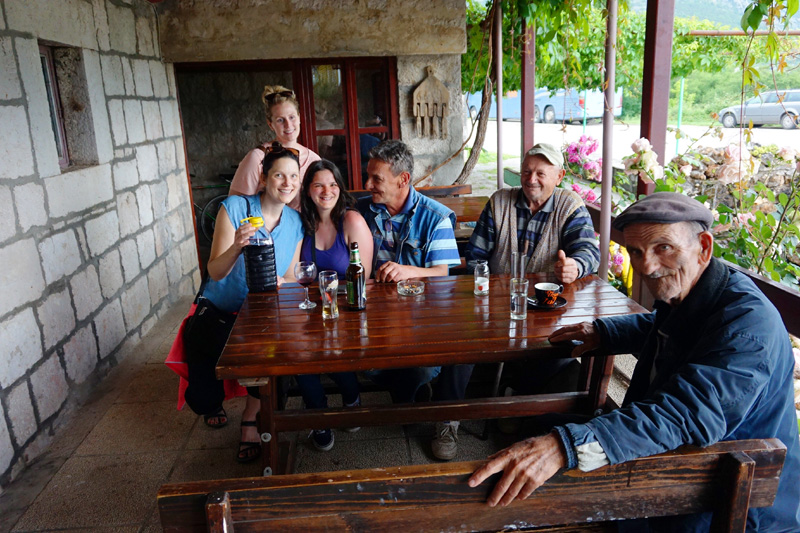
She calls travel “dehumanising”, the exact opposite of what travel should be. According to her, we are “thrust” among people as “spectators”. Once again, I feel like I know where she’s coming from – on a short trip, of course we are unlikely to make lifelong friends or have a life-changing experience with a stranger. That’s the nature of travel; temporary friendships, some which linger in our souls, and some which are mere acquaintances. All of these connections can mean something, or they may not. The most important thing is that we can learn from them, and I have made so many connections around the world that have opened my eyes to something I wouldn’t have seen otherwise – insights into real people’s lives, the differences and the similarities. Even just a simple smile that you quickly learn are the same in every language. Humanisation of people you would otherwise never meet.
Yet in this article, these connections are reduced to spectatorship, as if once again something that isn’t immediately meaningful should be written off – but what’s wrong with trivial connections, anyway? (Unless, of course, you’re “trying to see the Frenchness in the French people” like the writer of the article. In fact, no wonder she thinks travel is dehumanising if this is how she sees people.)
The final point of the article illustrates this succinctly, and is actually the one thing I agree on –
Travel is fun, so it is not mysterious that we like it. What is mysterious is why we imbue it with a vast significance, an aura of virtue. If a vacation is merely the pursuit of unchanging change, an embrace of nothing, why insist on its meaning?
Travel IS fun, and it doesn’t have to have meaning. Yet the entire article has just furiously told everyone that their travels are pointless, mean nothing, and if you have had any sort of epiphany along the way that says otherwise, then you’re lying to yourself.
Don’t get me wrong – travel has changed me in a lot of ways. It’s made me more confident, it’s pushed me out of my comfort zone and shown me what I can deal with in adverse moments and conditions, and it’s introduced me to people (yes, from those times I’ve made connections with actual other human beings) who have themselves changed my life in many ways. I’ve experienced cultures I knew nothing about – whether that’s for a week or several months, it doesn’t make it any less meaningful – and I’ve learned a lot about humanity, nature, history, geography, politics.
Travel isn’t the only thing that can bring this, but it’s the one I’ve chosen. To say that I’m delusional for daring to find meaning in my travels is patronising at best.
But at the same time, travel ISN’T necessarily life-changing – and that’s okay, too.
I found myself agreeing with this point more than anything else in the article, because it’s true, but at the same time it fell a little flat after several hundred words trying to convince the readers that their travels are a bit shit, actually. It was almost jarring to see her suddenly call it “fun”.
But the point remains – people might visit attractions because they feel like they have to, or they might take hundreds of photos until they get the perfect shot that they’ve seen on Instragam just to post it on Instagram themselves, but one thing a lot of people hold onto is the romanticism of travel and returning home a changed person. Leaving your home to truly find yourself.
And maybe this leads to the most important point of all – expectations. It’s a theme that runs throughout the whole article, and is probably the only part I consistently agree with, because it can, somehow, be applied to most of the points she’s making. Ironically, I’d argue that this is exactly what’s caused the writer to seem so bitter about her own travel experiences.
Expectations can make or break travel, and it’s why I try not to travel with them too high. Lots of places have surprised me because I’ve gone in with no expectations; others have disappointed me, and that’s fine. But it’s not just about the places – it’s about how those places make you feel.
Realistic expectations mean I don’t mind being disappointed. We don’t have to love everywhere and it’s inevitable that we won’t – if anything, it helps me to enjoy the places I love even more. You don’t need to travel with childlike wonder, nor should you wait expectantly for the next life-changing moment.
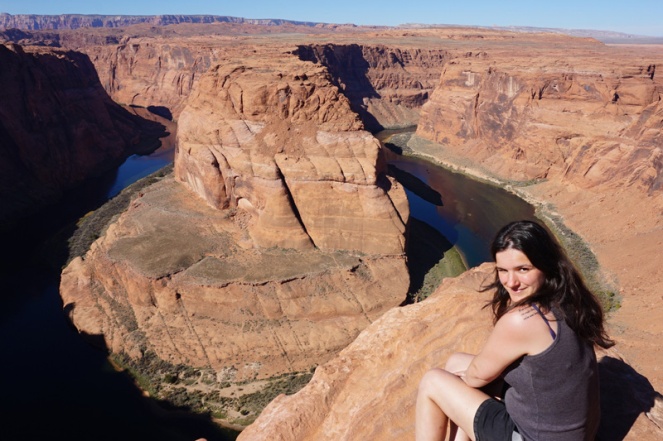
Sure, some people might be like the example she gives in the article where a tourist rocks up at the Grand Canyon on a bad day and the pictures don’t quite come out as well as the perfect postcard they’ve seen. They might be disappointed if it doesn’t look how they saw it on Instagram. It’s disingenuous to infer that most people would feel this way.
Social media hasn’t helped, of course. Expectations are higher than ever, with the additional expectation of being able to document it all perfectly. It’s a trap a lot of people have fallen into in their daily lives – even with the constant self-surveillance of people’s lives, we’re still really only seeing the highlight reels, and people want just that in their own lives – the highlights without all the nitty gritty in between. We forget, sometimes, that the nitty gritty is exactly what makes it all feel real.
As for travel changing you, I think there’s a reason it doesn’t work for everyone. You need to already be willing to be changed. People build up travel as being the answer to a lot of problems and a way to change attitudes. But apart from the fact that’s not always how travel works, you have to be the sort of person who can accept a change of attitude in the first place.
Like many things, it is all about perspective. In fact, the writer even quotes “what I gained by being in France was, learning to be better satisfied with my own country” and positions this as a view that supports her point of travel being meaningless. It seems to me that she’s completely misunderstood this – surely seeing your own country from a new perspective IS a change. Changes don’t have to be profound, nor do they have to be immediate.
And so maybe travel will change you, just not in ways that you would expect. If you’re expecting it to change you in a certain way with no effort on your part, it probably won’t. It challenges your existing biases but everything else has to come naturally – it’s not something that can be forced. All of my changes have been small, gradual and eventually noticeable.
Managing expectations is a huge part of life, not just in travel. In the same way that lots of people say travel can cure all your problems, the grass is always greener on the other side in every day life, too. People have a habit of shifting their problems from one scenario to the next, not thinking to get to the root cause of it and instead wondering why nothing has changed.
It’s exactly the same with travel – if you leave with high expectations, you’ll be disappointed when those expectations aren’t fulfilled. Openness to experiences? Remain open; just don’t expect an epiphany on every corner.
Discover more from An Orcadian Abroad
Subscribe to get the latest posts sent to your email.
I took a look at the article and based on what the author wrote (and your review of it), I think the author is coming off as quite bitter and disillusioned with the whole idea of travel being “life changing.” Perhaps the author had traveled with expectations for an enlightened experience, only for it to fall flat. If so, the author’s experience is valid, but that doesn’t mean that EVERY person who says their trip was “life changing” is being pretentious or BS-ing. Everyone’s travel experience will be different, and whether one wants to delve deep into their adventures or simply check out the touristy landmarks, all forms of travel are valid and no one is better than others. Personally, I like to strike a balance between visiting touristy sites and the lesser-known ones in the same trip, for a more-comprehensive idea of the place I’m visiting. Very insightful article to read about and your ideas on it, so I appreciate you sharing this!
Great response to the article! I completely agree that travel doesn’t need to be super meaningful and life changing or exceed every expectation. I feel like the best reaction to this article was just to stop policing how other people travel. Let people travel however they want (as long as they’re not harming anyone/anything) and for whatever reason they want with whatever takeaway they want!
Fantastic insights on travel! It can definitely bring about different reactions and changes in the way we think, and perhaps sometimes nothing what we expect, but maybe something even better. I certainly agree that social media has played a huge part into what people do expect to get out of where they are travelling and feel the need to do it all or compare their trip to someone else’s. I like how you ended your thoughts on just being open to whatever the trip brings you 🙂 great advice!
a very well said counter to the article- great thoughts and insightful advice 🙂
Haha – I had that same reaction: well, this writer doesn’t like animals, so there’s a mark against her already.
Another thought I had was that she has had one too many encounters with shallow, “show-off travelers” (and the social media folks who just go places to have something to stick on their social media – those folks make me wanna rant, too) and she’s sick to death of them, thus, the rant.
All I know is that I am the sum total of my life experiences, and that while some travel experiences don’t seem to change me, I may never fully grasp the small changes that have occurred from the experiences. Never mind all the travels that HAVE resulted in new friendships and lifestyle/perspective changes. (A long-ago trip to France was the catalyst to a new, life-long hobby for the husband: French cooking and a huge weight loss.)
Finally, if she doesn’t want to travel, fine. But let the rest of us be.
[…] posts: Don’t Enjoy Anything Anymore? Here Are 8 Ways to Overcome Anhedonia Travel Doesn’t Have To Be Life-Changing – And That’s Okay Travel Is No Cure for the […]